In food production, a floor doesn’t fail “from chemicals in general” — it usually fails at specific details: near drains, in corners, along joints, and where there is thermal shock. The right system is material + detailing : slopes, covings, sealing, slip resistance.
Food production areas and typical solutions
Don’t try to “cover the whole plant with one material.” In the food industry, the right approach is to divide the floor into zones: wet/hot areas, dry packaging, cold rooms, and loading. Below is a practical guide.
| Area | Key risk | Must-haves | Solution |
|---|---|---|---|
| Washdown / CIP | Hot washdown + thermal shock + chemicals | Slopes to drains, cove base, sealing |
PU‑cement 6–9 mm
For thermal shock and wet areas, R11–R13 as required.
|
| Main production (fats) | Fats/oils, disinfectants, wear | Controlled slip resistance | PU‑cement or a combined approach with epoxy in dry zones |
| Cold rooms | Low temperature, short repair “window” | Rapid strength gain |
Rapid return to service
When you need to quickly repair and restart an area.
|
| Packaging / corridors (dry) | Abrasive, carts, dust | Wear resistance and easy cleaning | Epoxy 2–3 mm |
Details that make a floor “hygienic”
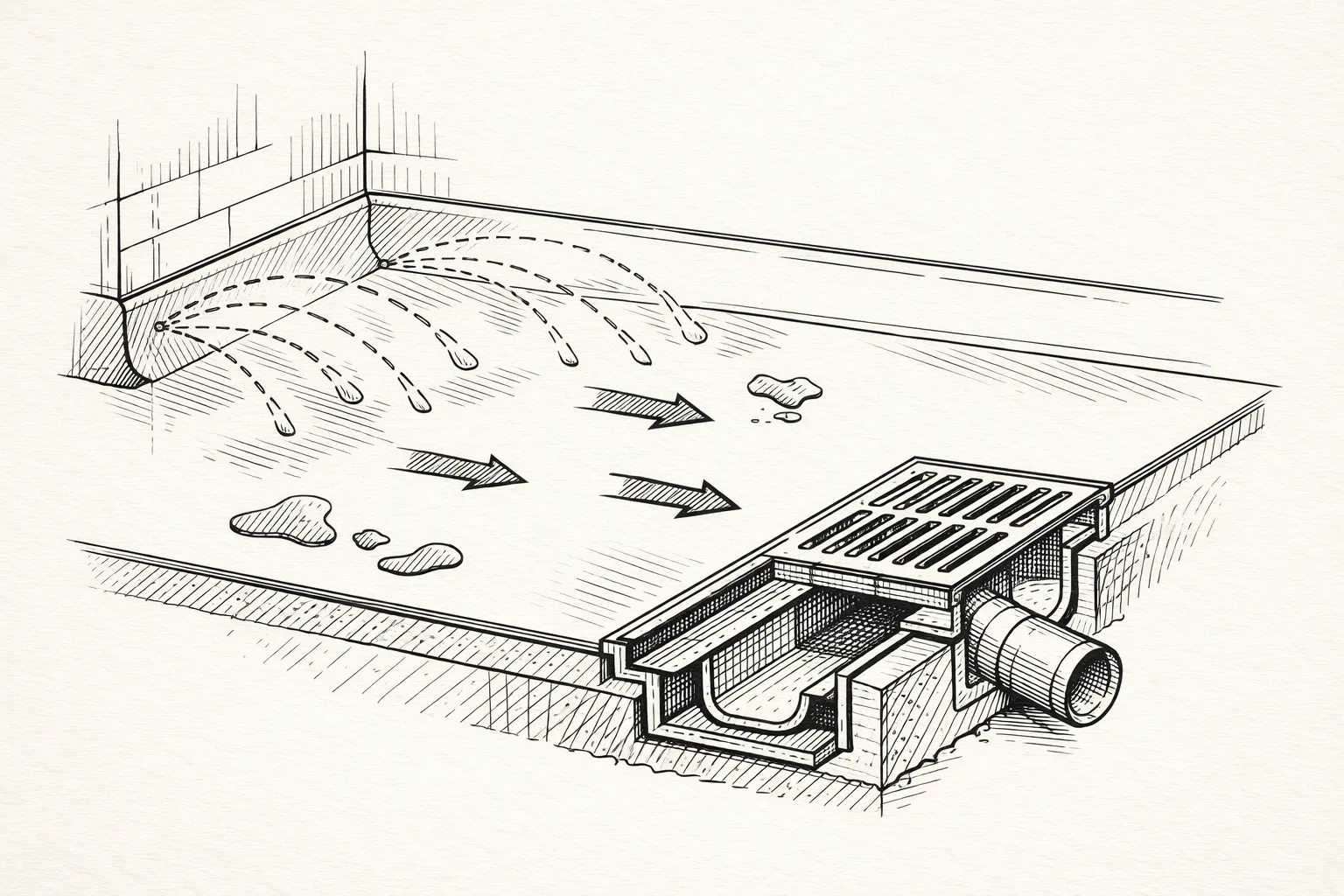
- Slopes to drains — to avoid puddles, slipping, and “long contact” of chemicals with the floor.
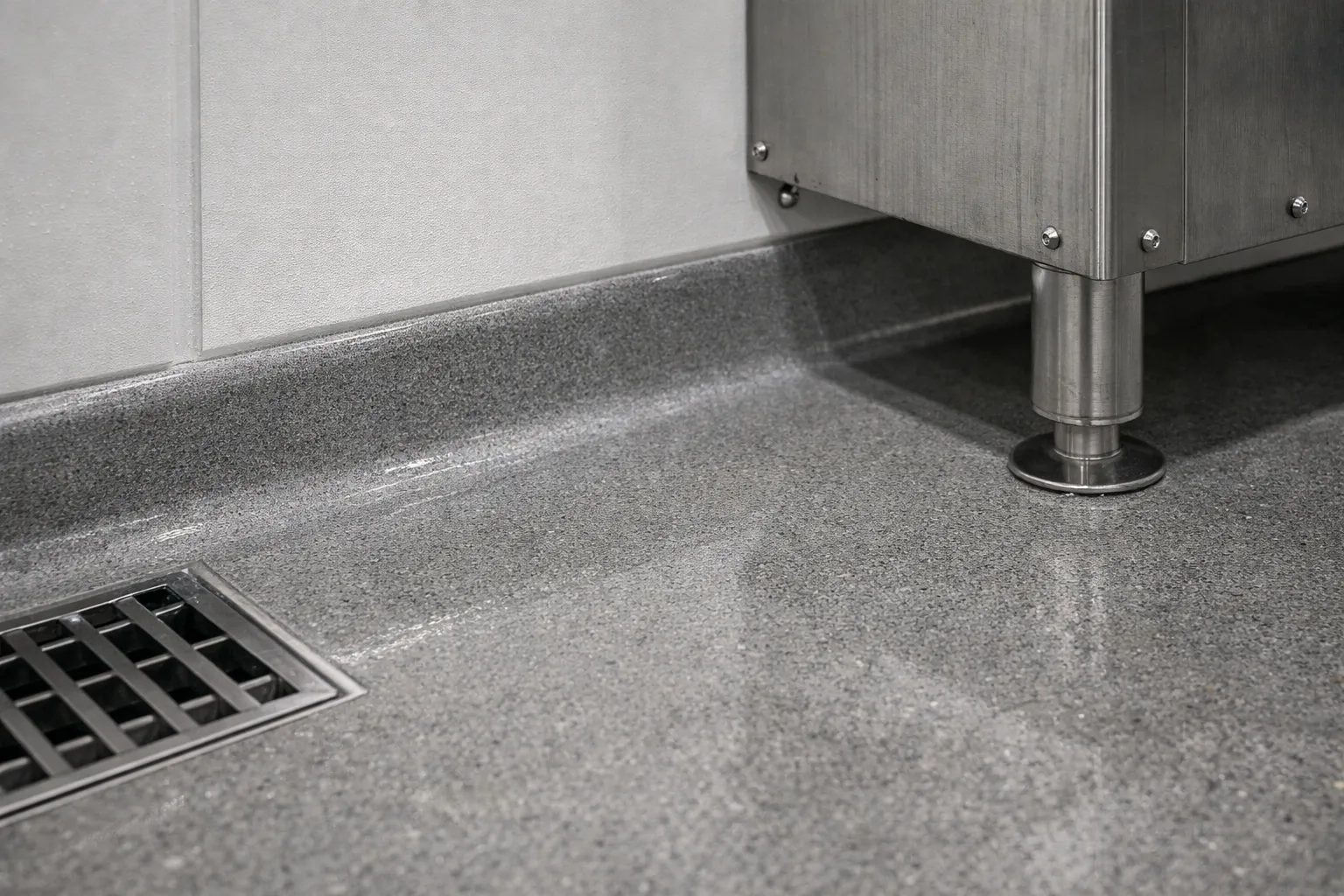
- Cove base / sanitary skirting — removes the 90° corner at the floor-to-wall junction, makes washdown easier, and reduces the risk of loss of seal.
- Joints and terminations — must be sealed and maintainable: open joints quickly lead to delamination along edges.
Slip resistance without “sandpaper”
In wet and greasy areas you need a high level of safety, but a very rough texture is harder to clean. The optimal approach is zoning : increase slip resistance locally (wash areas, ramps), while keeping a more cleanable surface in corridors.
For hot washdown and wet areas. A plus is maintainability and the ability to set the required level of slip resistance.
View system →Spec checklist: 7 questions that save budget
- Where is hot washdown, and what are the water/steam temperatures?
- What washdown/disinfection chemicals are used (list + SDS), concentrations, and contact time?
- Where are fats/oils present, and how often are these areas washed?
- What are the slip-resistance requirements (and in which areas)?
- Where are the drains, what slopes are needed, and is cove base required at the walls?
- What loads are expected (carts/forklifts), and are there impact zones?
- What downtime “window” is available: hours/days?