 LBC Industrial Floor · materials for industrial floors
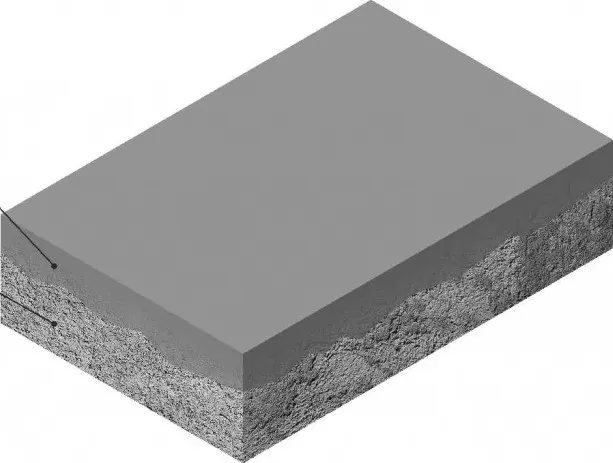
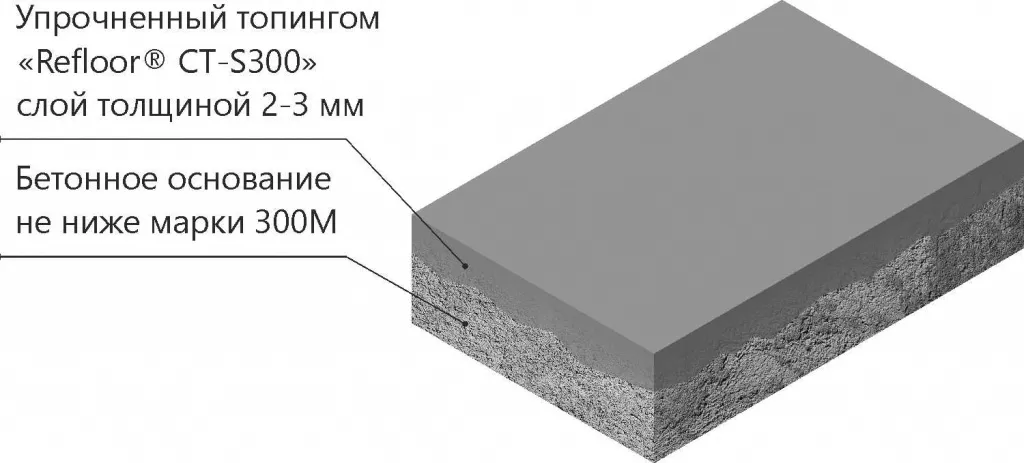
Refloor® CT-S300 metallic dry shake topping is a modified single-component cement-based compound for hardening concrete floor surfaces, designed for maximum coating strength and reducing wear of M300 concrete by more than 15 times.
Get product selection and project estimate
Warehouse in Tashkent, Muynakskaya St., 135. Shipping across Uzbekistan and Tajikistan.
Refloor® CT-S300 metallic dry shake topping:
Refloor® CT-S300 topping is intended for finishing the surface of freshly placed concrete floors in warehouses, parking areas, workshops and industrial zones, as well as in facilities:
Filler type: specially selected ultra-durable graded steel aggregate resistant to chemical attack, corrosion, impact and abrasive wear.
The technical characteristics of the material comply with GOST 31358-2007.
One of the key advantages of Refloor® CT-S300 topping is the possibility of applying the hardener at a later stage of concrete curing.
The key characteristic determining the service life of the finished coating is the material’s resistance to abrasive wear. Based on BCA testing of the Refloor® CT-S300 dry floor compound in accordance with EN 13892-4**, the material has been assigned wear-resistance class AR0,5.
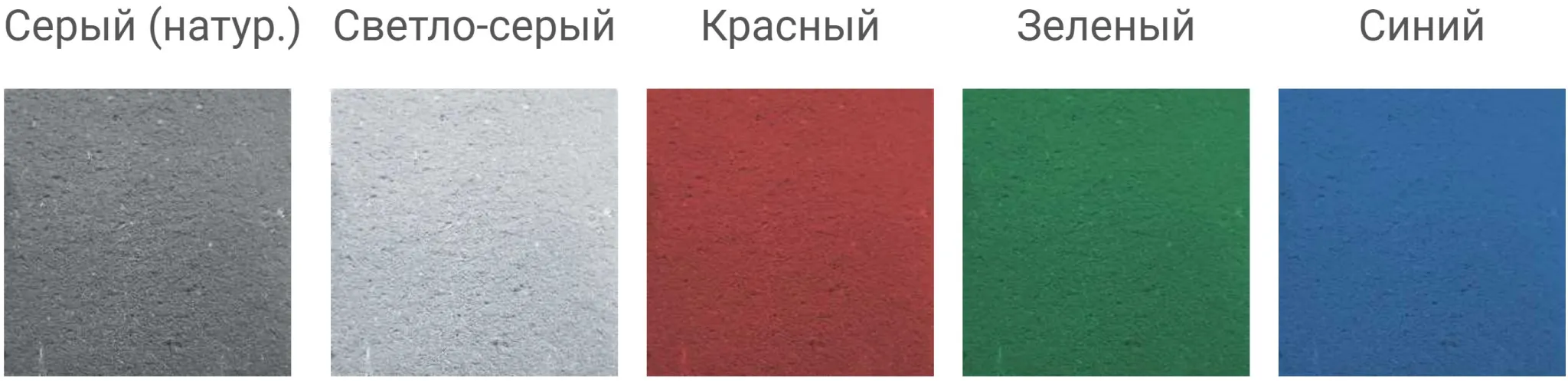
| Gray (natural) | Light gray | Red | Green | Blue |
*Toppings with corundum and quartz fillers.
**The loads applied to the surface by the rotating wheels of the BCA test machine fully correspond to real loads on floor surfaces.
| Strength development period | 28 days |
| Material consumption per 1 m² | natural color – 3–5 kg, colored – 7–8 kg |
| Layer thickness | 2–3 mm |
| Compressive strength after 28 days | min. 105 MPa |
| Tensile strength after 28 days | min. 10,5 MPa |
| Pull-off strength after 28 days | 2,0 MPa |
| Abrasion class by BCA method (EN 13892-4) | AR 0,5 |
| Bulk density of the mix | 2060 kg/m³ |
| Pedestrian traffic | after 24 hours |
| Maximum aggregate size in dry mix | 3,2 mm |
| Light load (up to 200 kg/cm²) | after 7 days |
| Resistance to environmental aggressiveness | non-aggressive and slightly aggressive according to SNiP 2.03.13 |
| Resistance to liquid exposure intensity | high according to SNiP 2.03.13 |
| Shrinkage | max. 0,09% |
| Service temperature, short-term exposure | from −60°C to +300°C |
| Abrasion loss on LKI-3M disc | 0,05 g/cm² |
| Impact resistance | 30,0 kg/mm² |
Product technical documentation.
PDF · 3.2 MB
Quick contact
Message us or leave a request — we will respond quickly.