
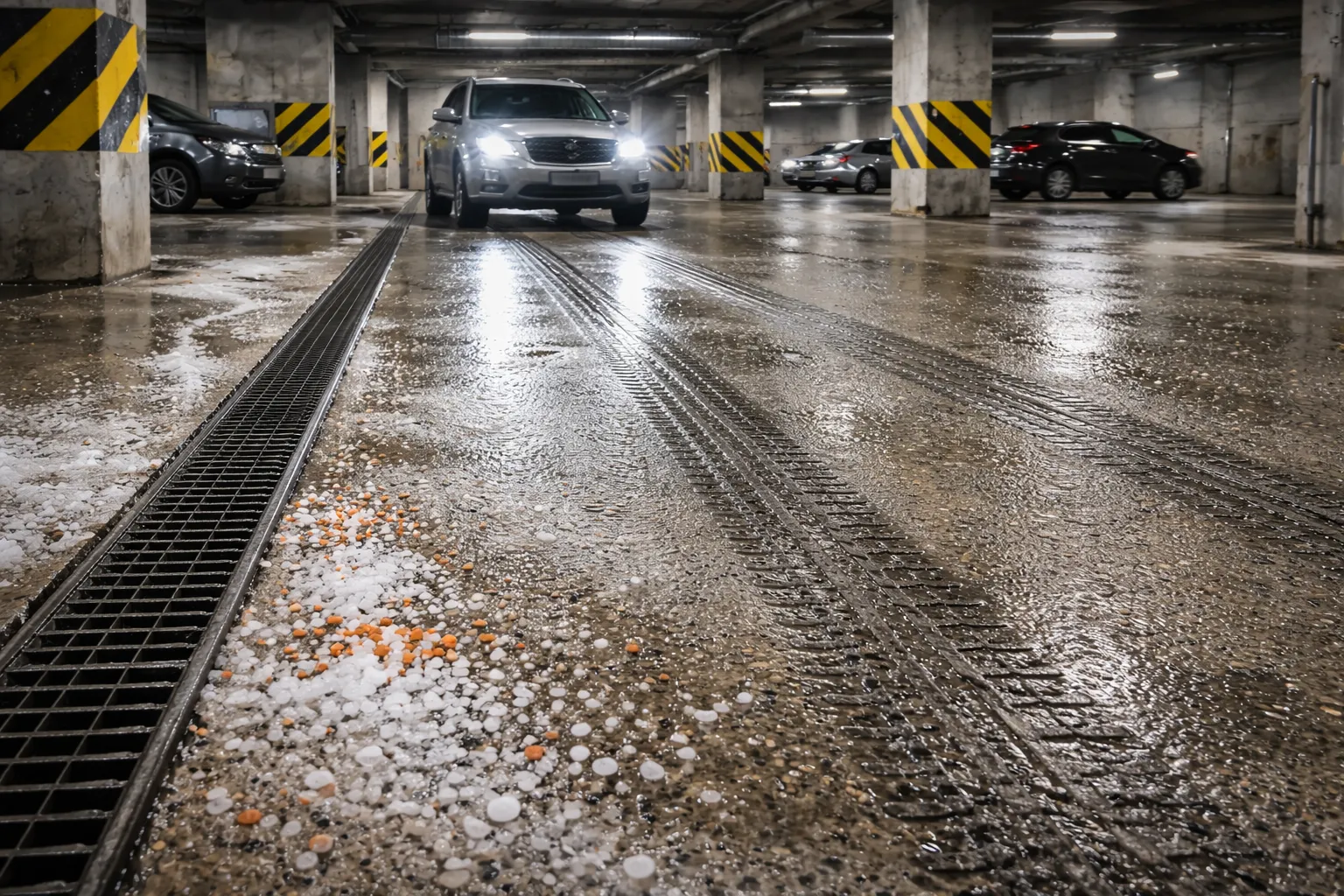
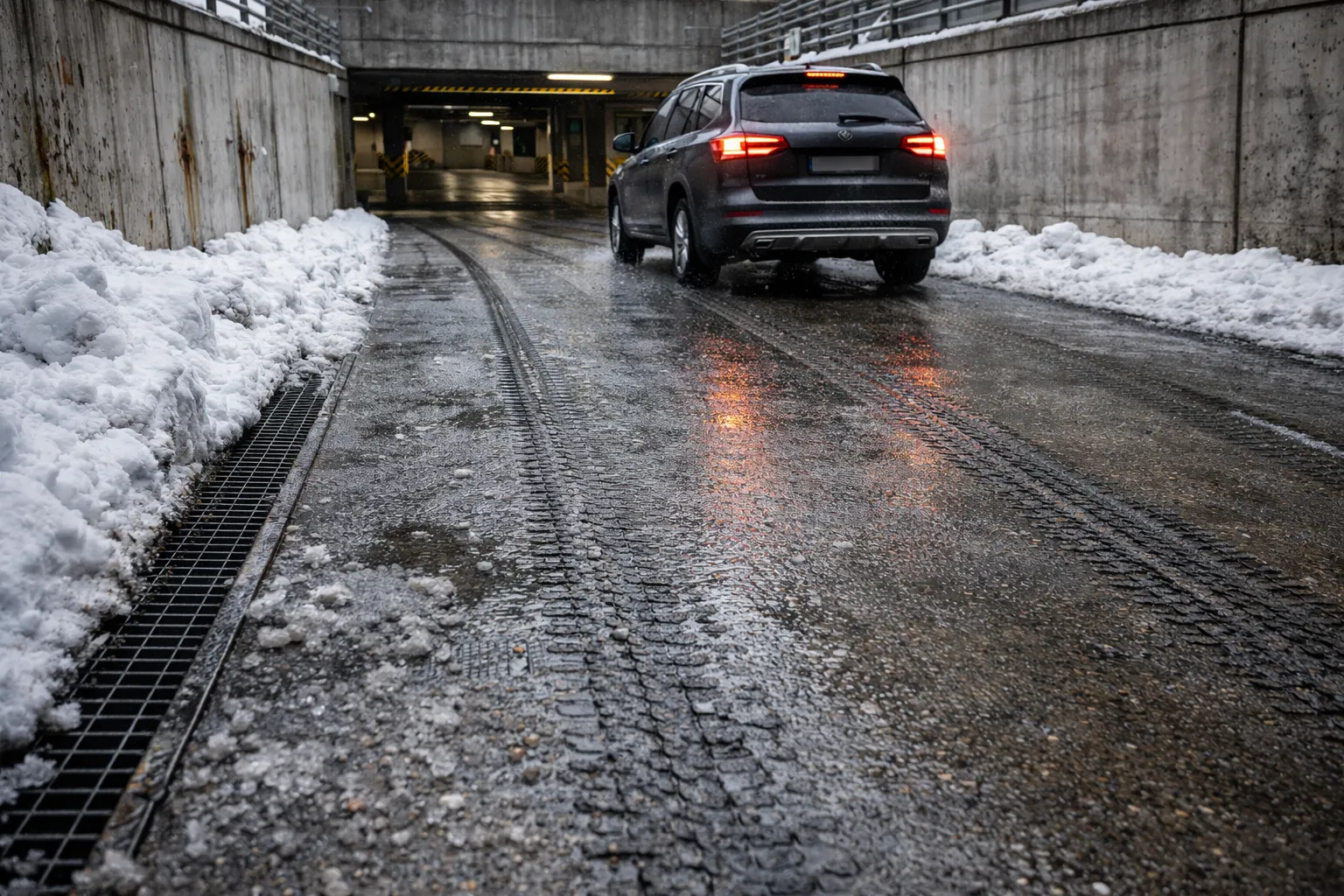
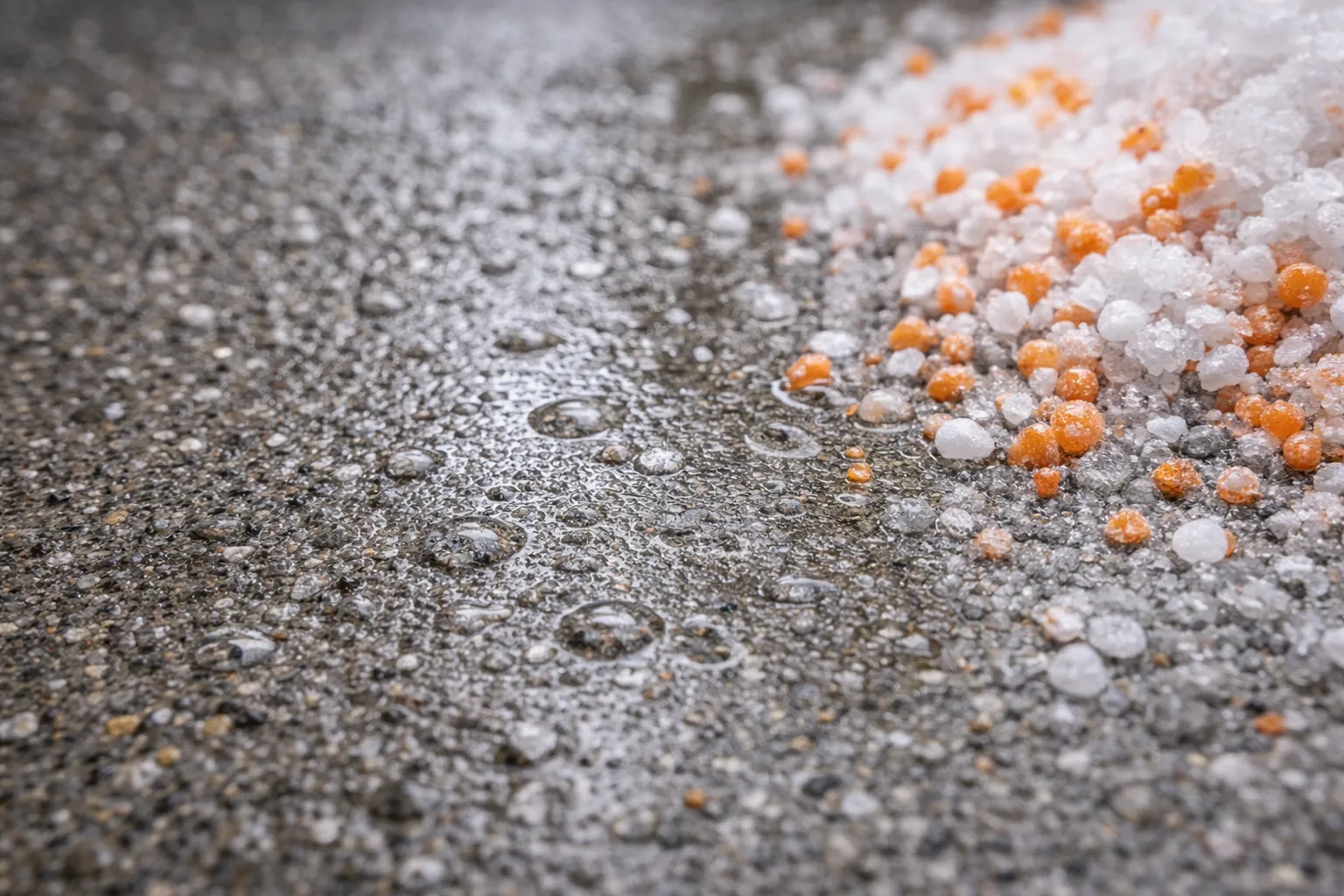
A parking garage is a place where a polymer coating is exposed to mechanical loads (braking/turning), contact with water (melted snow, washing, condensation) and exposure to chemicals (oils, fuel, salts/de-icers). If you make a mistake with the slip-resistant texture, waterproofing details, or substrate preparation, "cosmetics" quickly turns into constant repairs.
In short: what to check before choosing a system
Save this checklist - it covers about 80% of the reasons for debonding and "suddenly slippery" areas.
Ramps, entry/exit, upper levels, wash zone, elevator lobbies, "pockets" with no slope.
On slopes and in turns - almost always. It is important to choose the texture and how it is achieved.
Salts retain moisture and accelerate failure at weak details. Think through washing, drains and a protective topcoat in advance.
Moisture from below is a common reason for blisters and debonding. Measure moisture and confirm whether a barrier exists.
1) Start with a zone map, not a product
In the same parking garage, the floor is rarely "the same everywhere". To choose the coating correctly, start by splitting the facility into zones - and only then select a system for each.
A simple template for underground and multi-level facilities.
Maximum slip risk + wear from braking.
Flatness, resistance to fuels/oils, easy cleaning.
Constant snow/water + de-icers carried in on tires.
Safety, comfort, and readable markings.
In practice: if you try to do "one material everywhere", you will usually either overpay or end up with problems. More reliable is 2-3 solutions by zone: a stronger texture where it is needed, and a smoother, maintainable finish everywhere else.
2) Slip resistance: R-class and "orange peel" texture
An "anti-slip floor" is often reduced to "broadcast some sand" or "make it rougher". In a technical specification it is better to define the requirement through an R-class (R9-R13) and/or by describing the texture and test method.
A simple guideline by zone
Below is a practical reference. Exact requirements should be confirmed by the project and local regulations.
| Zone | Guide | Notes |
|---|---|---|
| Underground/indoor parking | R10 | If there is no constant water exposure and no steep slopes. |
| Entry/exit, weather-exposed areas | R11 | Water/snow/de-icers dramatically increase slip risk. |
| Ramps and turns | R11-R12 | Here the texture and durability of the top layer matter most. |
Important: the R-class is a lab rating. In real life traction depends on contamination, detergents, cleaning frequency, and texture wear.
"Orange peel" texture - when it makes sense
"Orange peel" is an even, fine texture that resembles citrus skin. It adds traction without turning the surface into "sandpaper" that is hard to clean.
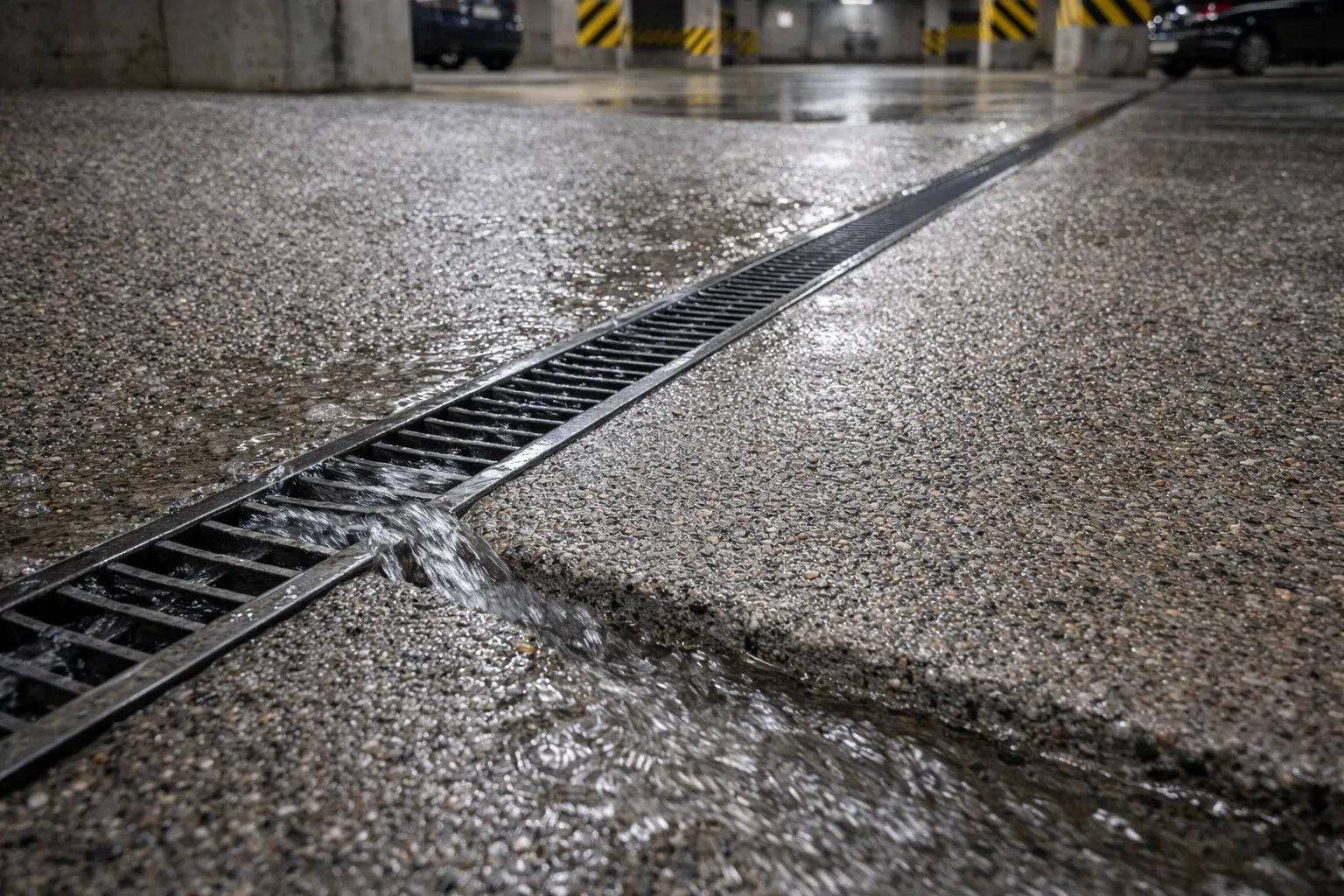
- Pros: easier to clean than a coarse quartz broadcast; less likely to trap dirt.
- Cons: there is a limit - for very wet/steep ramps it may be insufficient.
- Where it often works: drive aisles, parking bays, moderate slopes, areas with regular washing.
How to achieve slip resistance "without surprises"
The word "roughness" can mean completely different things - both for safety and for maintenance. That is why the method of forming the texture should be specified upfront.
- Light texture ("orange peel"). Provides neat traction and cleans well.
- Quartz broadcast + sealing coat. For ramps and wet areas; sealing is critical so the grit does not break out.
- Combination by zone. The most practical approach: more aggressive on ramps, more even and easier to maintain on parking bays.
3) De-icers and salts: why "everything was fine until winter"
Tires bring in a mix of salt/de-icers, dirt and water - sometimes with oils and fuel. Even with a chemically resistant coating, the issue is often not that the de-icer "dissolves the polymer", but that salt retains moisture and accelerates failure at weak details.
The main risk is water + salt + a weak detail
If there is moisture in the slab (or no vapor barrier), and a "salty brine" sits on top constantly, you will quickly see blisters, softening of the top layer and/or debonding at the "concrete-primer" interface.
- engineered texture (not "sand without sealing");
- a wear-resistant topcoat that is easier to wash;
- proper drainage and no puddles.
- saving on preparation (dust/cement laitance/weak layer);
- poorly detailed joints and terminations;
- standing water with no clear washing routine.
- plan washing from day one (at least seasonally);
- in spring, wash salts out of the texture;
- renew the protective topcoat locally, without waiting for debonding.
4) Water and waterproofing: a coating is not waterproofing
Mistake #1 when choosing a floor for a parking garage is to assume that "polymer is watertight, so waterproofing is not needed". In practice, a polymer floor is a finish, while waterproofing is a structural element.
What to check in the substrate
- Concrete moisture and whether there is a vapor/waterproofing barrier under the slab (especially on the lowest level).
- Pull-off strength so the system bonds to sound concrete, not a weak surface crust.
- Cracks and movement joints: they cannot just be "coated over" - the details must be done correctly.
- Slopes and drainage: standing water = accelerated wear and higher slip risk.
Two water scenarios
From above: rain/melted snow/washing. Managed with slopes, drainage, texture and a durable topcoat.
From below: capillary moisture/groundwater/damp basement. This is a waterproofing and vapor-barrier problem.
5) Typical parking-garage defects: symptom -> cause -> action
Below is a simple "translator" from defect symptoms to root causes. It helps avoid cosmetic fixes and repair the floor so the problem does not come back.
A common cause is high concrete moisture + vapor pressure under the coating (osmotic blisters).
Insufficient preparation: dust, cement laitance, a weak surface layer.
Impacts/studs/chains + insufficient thickness or an unsealed broadcast.
Substrate movement: shrinkage, thermal movement, joints not working properly.
An unsuitable texture: too smooth, clogged with dirt/oil, or a film of cleaning chemicals is left behind.
Water migration through concrete and joints (often due to missing waterproofing and unsealed details).
6) Local patch repair with "cards": how to make it last
A "card" is a local repair area with a neat geometry (usually a rectangle or a strip). It allows you to quickly restore worn areas on ramps and at the entry without closing the entire parking garage.
Workflow (simplified)
- Diagnostics: confirm the issue is local (and not slab-wide moisture coming from below).
- Boundaries: saw-cut the perimeter so the repair does not "pull" adjacent coating.
- Preparation: milling/grinding to sound concrete + thorough dust removal.
- Primer: choose it for actual moisture and porosity (the most common mistake).
- Layers: rebuild the base + texture (if needed) + topcoat.
- Transition: level the edge so it does not get hit by wheels.
When "cards" will not help
- if moisture is rising from below across the whole slab (no vapor barrier / damp basement);
- if the coating is peeling off in sheets because of a weak concrete surface layer;
- if joints and terminations are not fixed - water will return to the same spots.
7) Where to send a customer next: solution page and systems
For parking garages, what matters is not a single "material name" but a working system matched to zones and conditions. Below are quick links to typical solutions: epoxy systems and PU paints for thin-layer tasks and renewals.
Parking garages and car parks
Typical details, zone logic, texture recommendations, and system selection matched to your schedule.

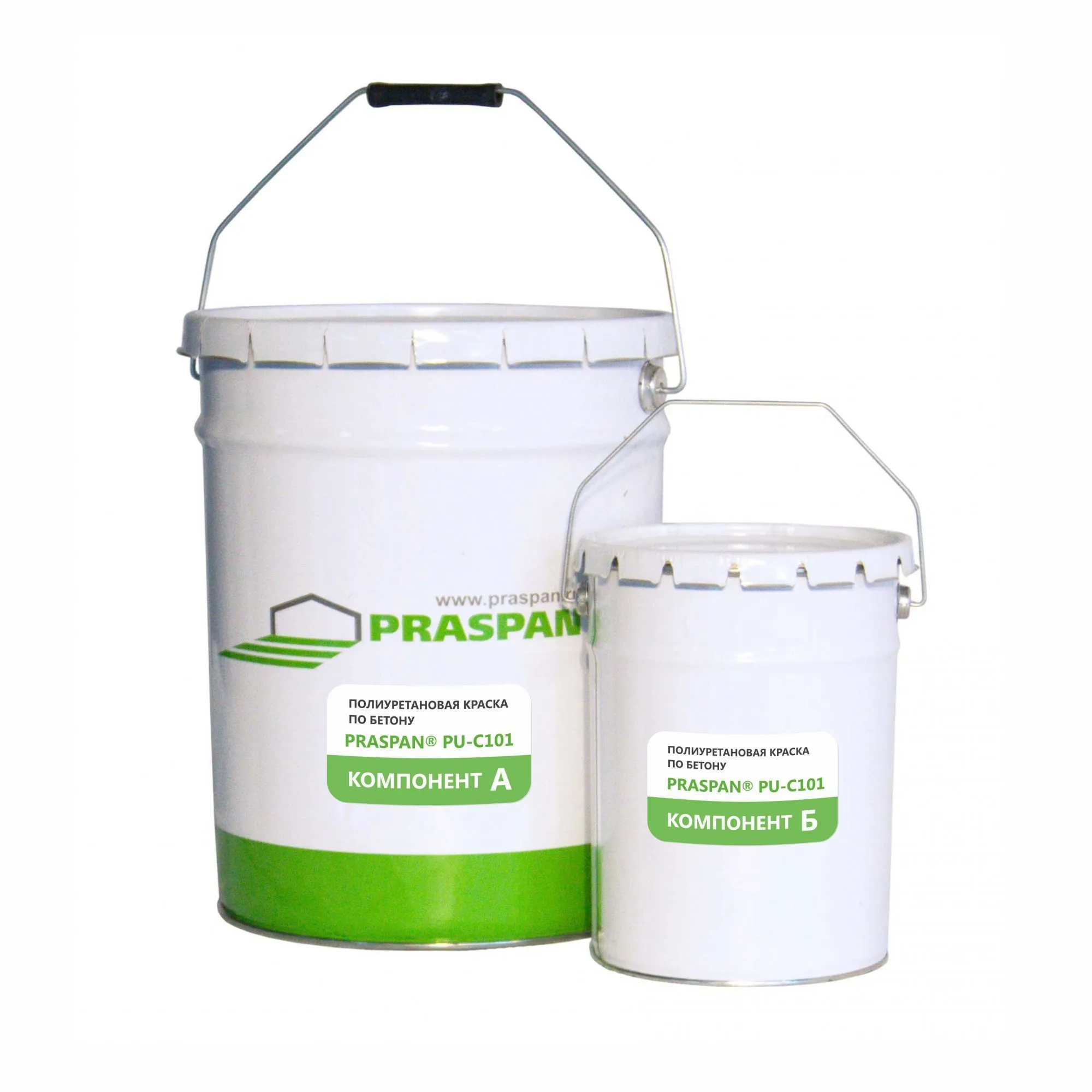
Mini spec template for a parking garage
If you request a quote, add these points (free form is OK). It speeds up selecting the right system.
- new slab or existing concrete, age;
- moisture (if measured) and whether there is a vapor barrier;
- pull-off test report (if available) or at least photos of the condition;
- cracks/joints/terminations: where and what type.
- which zones are wet and whether pressure washing is used;
- whether salts/de-icers are used in winter (yes/no);
- time to open to use (hours/days);
- slip-resistance requirement (minimum: "ramps as a separate zone").