Article

Warehouse & Logistics Floors: Zones, Loads, Wear and Marking

Warehouses and Logistics Zones • Loads • Marking Solution «Warehouses and Logistics» → Systems catalog →
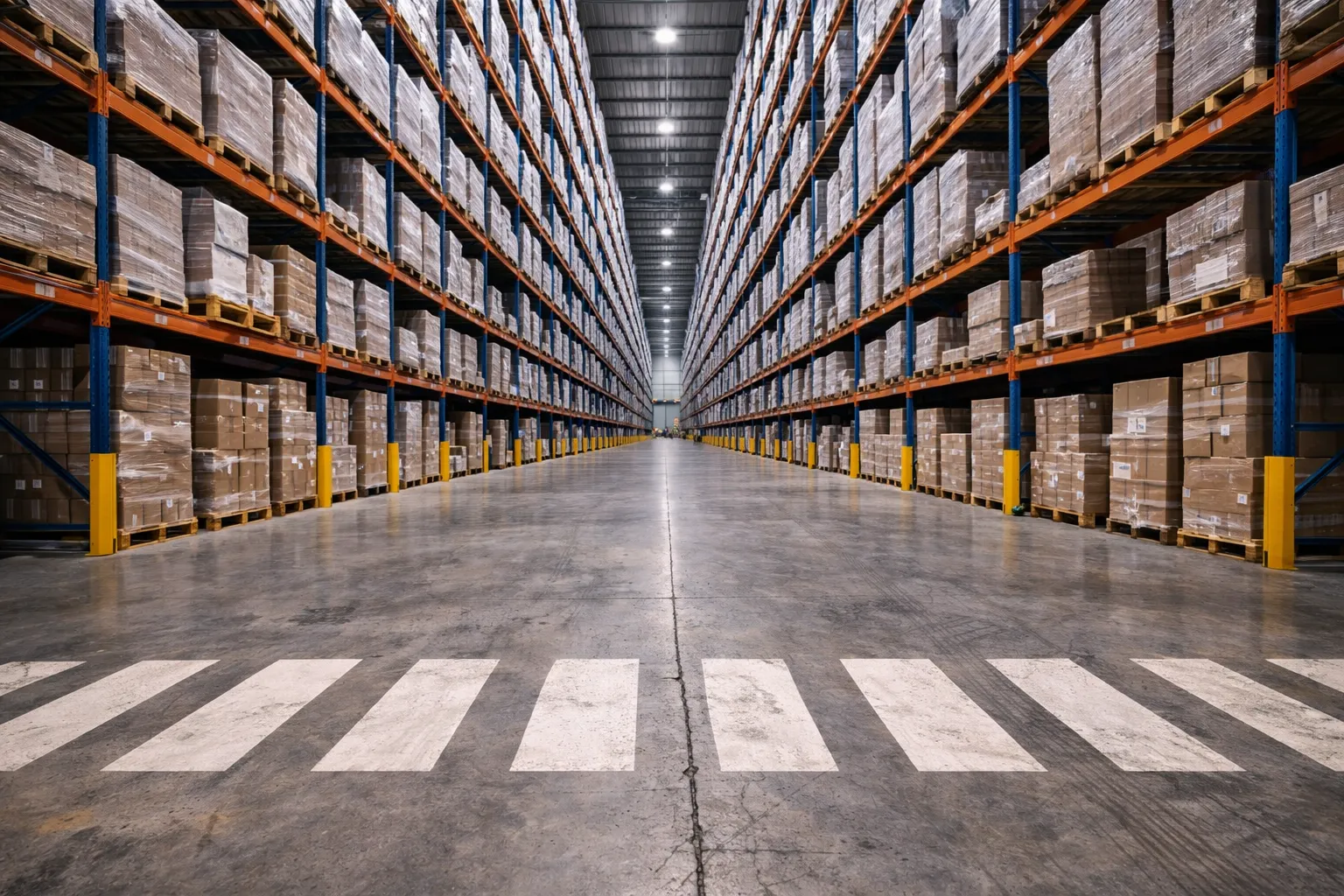
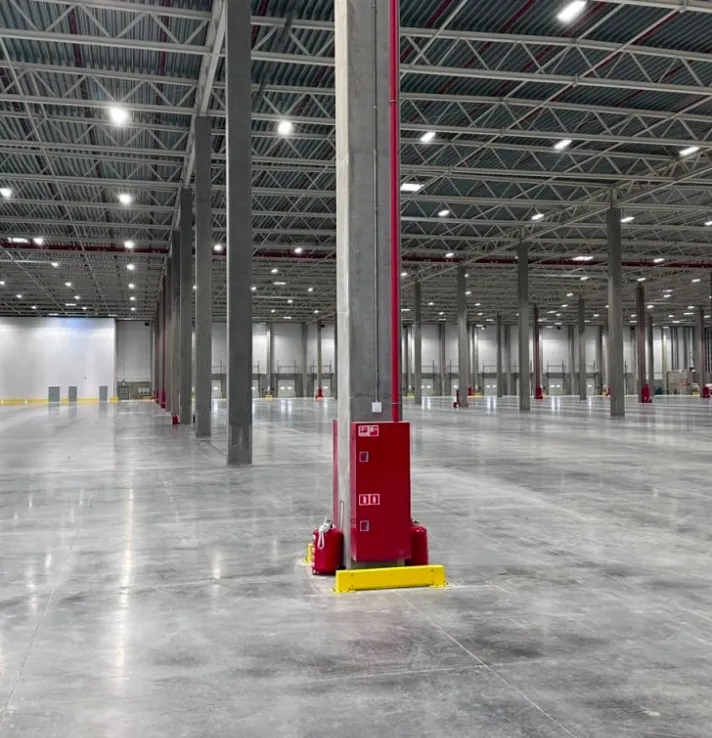
Industrial floor in a warehouse complex Logistics center: equipment traffic zones Floor in forklift drive lanes and maneuvering area
A practical guide for warehouses
A warehouse floor isn’t «one system for the entire site», but a set of zone-based solutions . A zoned approach makes service life predictable and reduces total cost of ownership.

A warehouse floor operates under abrasive wear , impacts , point loads from racking and vehicle dynamics (acceleration / braking / turning). That’s why the main question sounds like this: «What zones do we have — and what happens to the floor in each zone?»

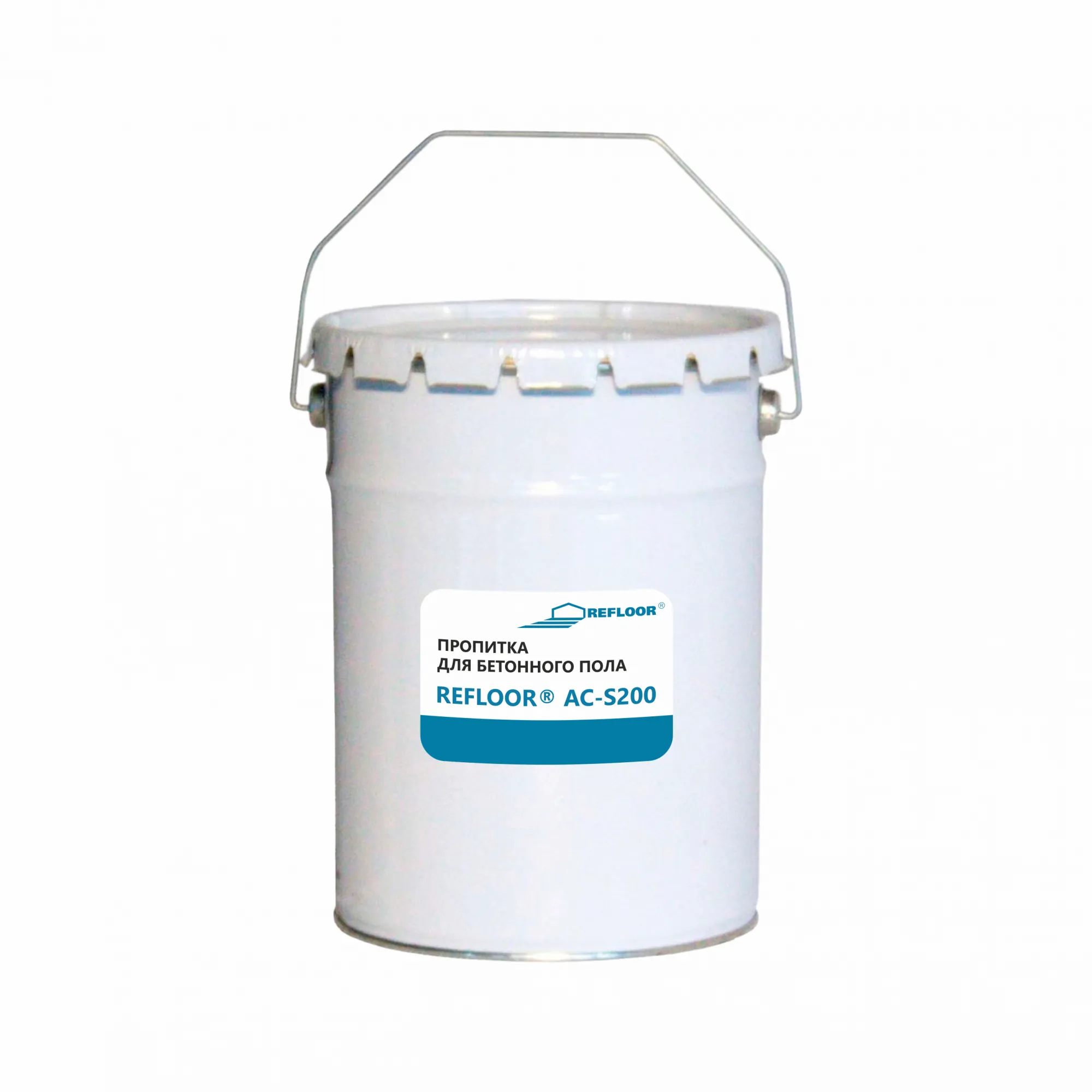
Below is a practical «map» of zones and a typical choice between impregnation (dustproofing) , topping , an epoxy system .

What actually «kills» a warehouse floor

A floor most often fails not because of “tons of load”, but because of a combination of factors that weren’t captured in the specification. If you understand the wear mechanics in advance, the solution becomes simpler and cheaper.
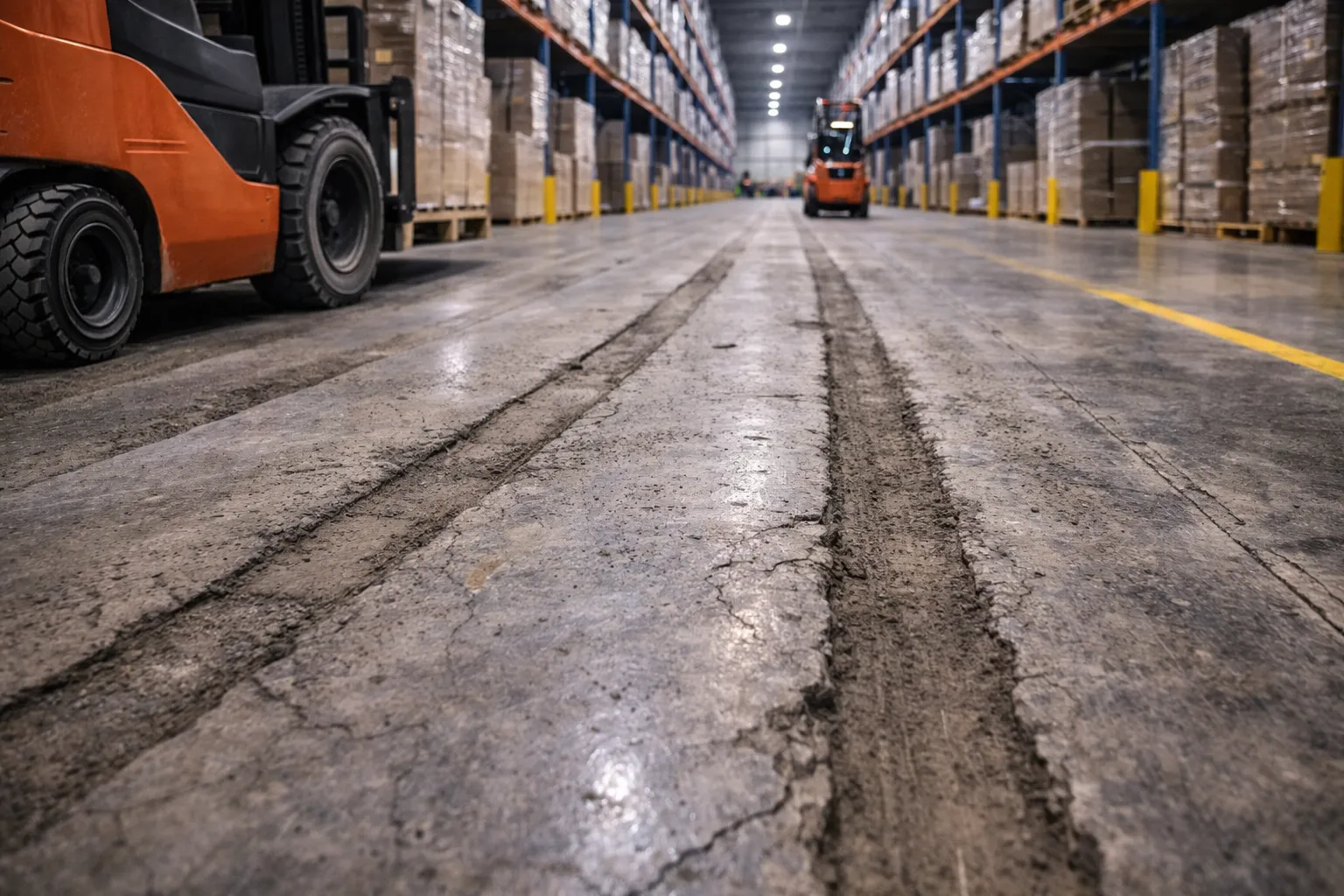
1) Abrasive grit (sand on wheels)
Even good concrete gets “eaten” quickly if there’s constant sand/dust on routes. Result: dusting, matte streaks, darkening, tire marks, and a worse overall appearance.
2) Turning and braking
The toughest spots aren’t straight drive lanes, but zones where the tire “shears” the surface: intersections, turning areas, picking, docks.
3) Joints, edges, and tie-in details
If joints aren’t protected and maintained, wheels and rollers quickly break down the edge. The center of the slab can be perfect — and failure will still start along the joint lines.
4) Localized «chemistry» and technical zones
Charging areas, vehicle service areas, and ramps live in a different operating mode: more spills, more dirt, and more frequent local restoration without stopping the warehouse.
Warehouse floor: general view Wear in equipment traffic zones Warehouse: high-wear zones

Key block: 5 warehouse and logistics zones (and what to choose)

Below is a practical warehouse zoning breakdown. The logic is simple: each zone has its own wear mechanism , which means you can select a more accurate solution.

1) Forklift drive lanes (main routes)
main square footage
Key inputs: wheel type (polyurethane / rubber), traffic intensity, presence of abrasive grit, cleaning regime. Here you usually need a balance: wear resistance + cleanability + a clear localized repair scenario .
Common choices:
2) Turning and braking zones
maximum wear
In these points the coating wears not so much from weight, but from shear : wheels “cut” the surface. That’s why a solution that performs very well on main routes can fail quickly on turns — if you choose “one system for the whole warehouse”.
In practice:
  • Reinforce the zones locally (create high-resistance «islands»).
  • For polymer floors — specify roughness / quartz broadcast in the specification in advance.
  • Plan repair «windows» (night / weekends) and a fast restoration technology.
3) Ramps, docks, unloading areas
impact + water + dirt
Typical set of problems: spalls near edges, impacts from pallets/pallet jacks, seasonal water and de-icers. Here it’s not only about the coating, but also the details: edges, joints, interfaces — and maintainability.
Common choice:
  • Topping (if the substrate is new) + proper joint and edge detailing.
4) Racking zones (static loads)
flatness + joints
In racking areas it’s not only the coating that matters, but also the substrate : flatness, concrete quality, cracks, joints. If joint edges “move”, racks start to “play” and risks increase.
Common choices:
  • Impregnation — eliminate dusting and reduce absorbency.
  • Epoxy — if you need a “cleaner” zone and easy cleaning.
Important: joints — maintain and protect them (it’s cheaper than major repair).
5) Charging / vehicle service zones
chemicals + localized repair
Small in area, but an “expensive” zone: more spills, more dirt, higher cleaning requirements, and more frequent localized restoration — without stopping the process.
In practice:
  • Choose a more “sealed” surface (easier to clean).
  • Build in a localized repair scenario from the start.
  • Work out the details and sealing precisely.
Usually epoxy systems are considered, and a localized repair scenario is included upfront.

Zone decision table (quick guide)

This is not “the ultimate truth”, but a convenient map for discussing the spec. On a real project everything depends on the substrate, cleaning regime, temperature, and operating schedule.

Zone Key factors Common choice Watch-outs
Drive lanes Abrasive grit, traffic, cleaning Topping (new concrete) or 2–3 mm epoxy Frequent wet cleaning / chemicals — clarify in advance
Turning zones Shear loads Local reinforcement + maintainability If there’s no shutdown — plan “windows” and fast technologies
Ramps / docks Impact, water, edges Topping + details; localized repair per maintenance plan Thermal shock and seasonal water — lock it into the spec
Racking Static loads, flatness, joints Impregnation or epoxy If joint edges are failing — be sure to repair the details
Charging areas Chemicals, localized repair Epoxy + maintenance plan; localized repair per method If there are special reagents — provide a list of substances

Warehouse marking: how to make it last (and not redo it every month)

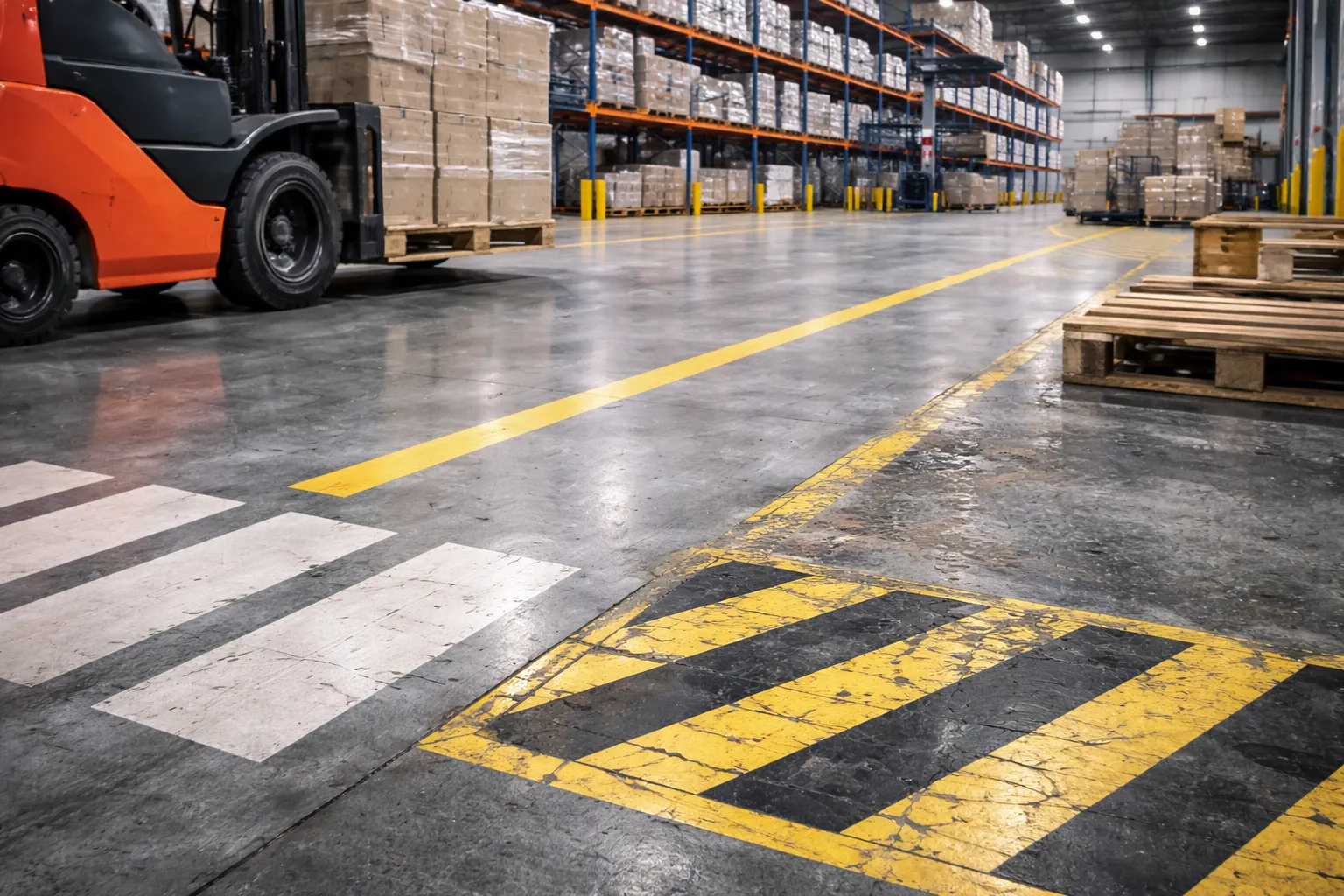
Marking is a consumable in a warehouse. It wears off not because of “bad paint”, but because it’s done without preparation and without protection in the most heavily loaded zones.

4 rules for long-lasting marking
  1. Preparation: degreasing + adhesion (light grinding/matting if needed).
  2. Material: selected for the substrate (concrete/epoxy/topping/impregnation).
  3. Conditions: apply under the right conditions (temperature/humidity) and within the right timing.
  4. Protection: in drive lanes and turning zones it’s better to include a protective layer in the specification.
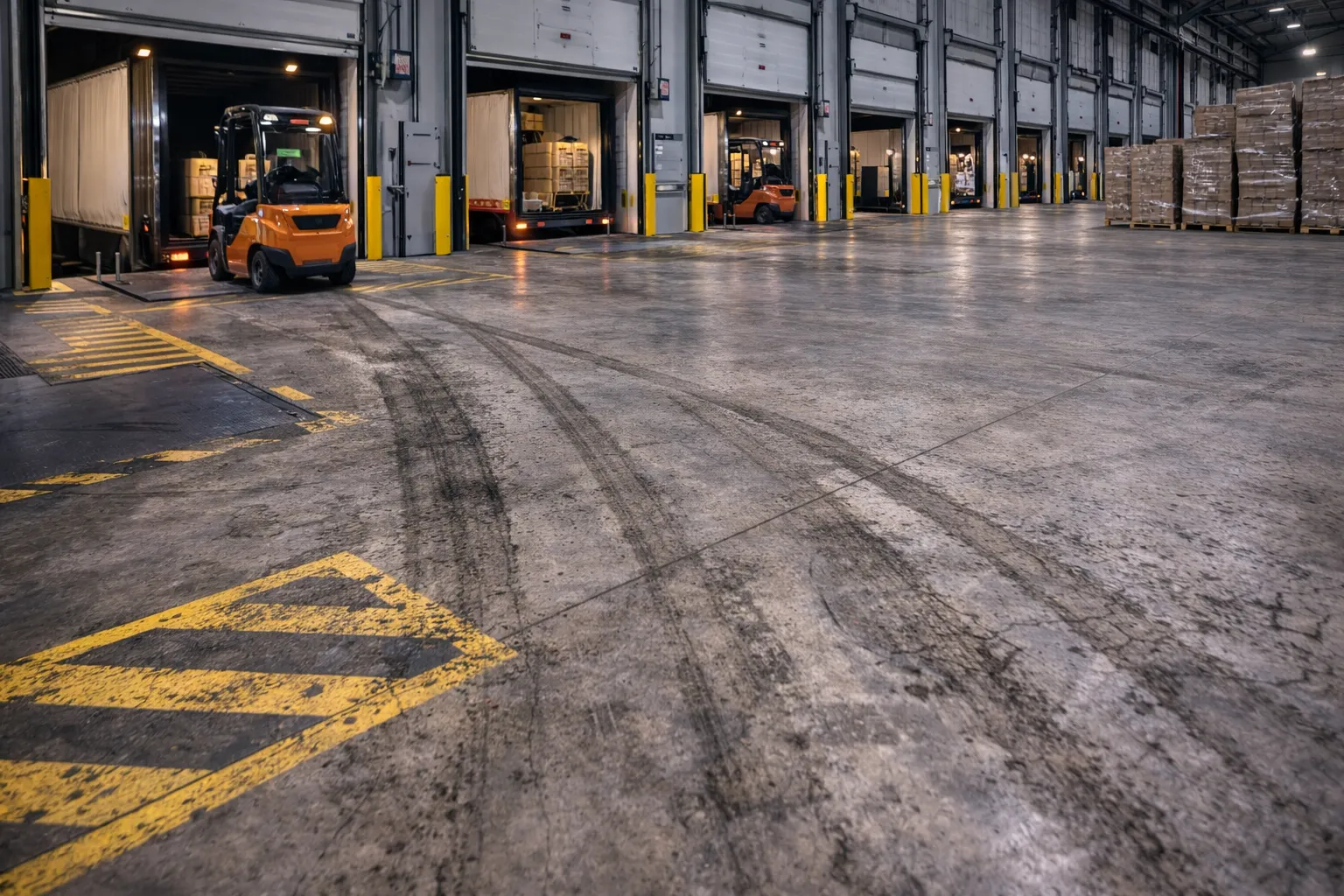
Warehouse marking and zoning
Practical approach
Treat marking as part of a zone-based project: main routes, turning areas, docks, pedestrian routes. Then you’ll only need to refresh the “hot” spots.
What to use for marking (example from the database)
Epoxy paint for concrete
PRASPAN® EP‑C101 — often used for marking (with the right method and protection in drive lanes).
Polyurethane paint
PRASPAN® PU‑C101 — an option when a different property mix is needed.
Important: the choice depends on what you have underneath (concrete/impregnation/epoxy/topping) and where the marking is placed (drive lanes/pedestrian routes/docks).

Cleaning and localized repair: so you don’t have to “shut down” the warehouse

In warehouse operation, it’s not the most expensive floor that wins, but the one with a clear maintenance routine and a fast localized repair scenario.

Mini checklist
  • Reduce abrasive grit: mats/grates at entrances, clean sand off the routes.
  • Monitor vehicle wheels: worn wheels accelerate coating wear.
  • Maintain joints and edges — it’s cheaper than major repair.
  • Renew marking by zones, not all at once across the whole warehouse.
Localized repair
If the warehouse operates 24/7, repairs are done in “windows”. For this, the localized repair technology and work logistics are planned in advance.
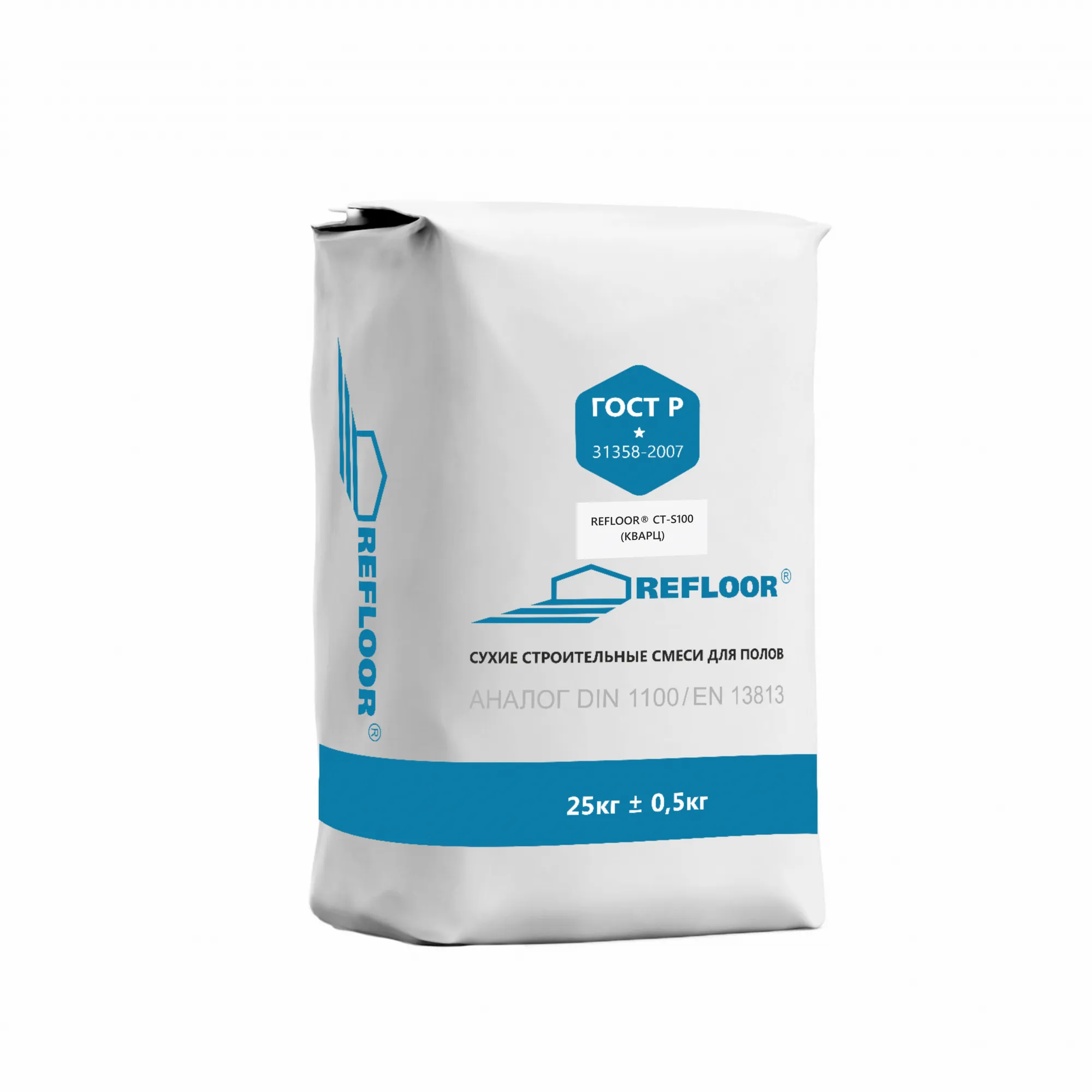
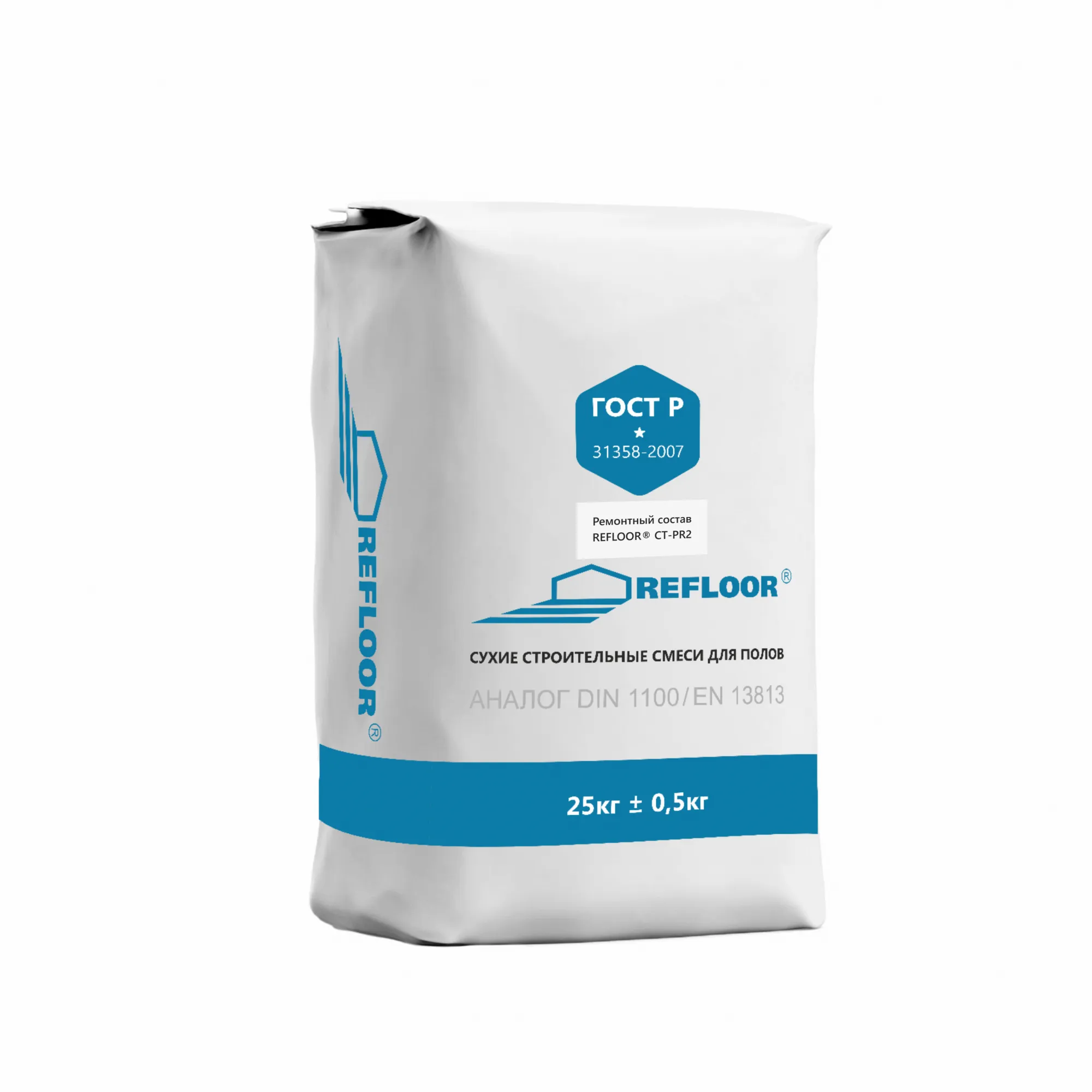
Example repair compound: REFLOOR® CT‑PR2 .

Examples from the database: warehouse systems and materials

Below are system cards and a few materials that often appear in warehouse projects. Handy for quickly assembling a “basket” and checking against the TDS.


Topping on fresh concrete
System
Topping on fresh concrete
A logical choice for new facilities: strengthens the top layer and holds up well in drive lanes with properly detailed joints.
Reference (example)
Case: Ozon warehouses
Ozon warehouses — industrial floors (case study)
The case helps you understand the selection logic and why on large areas wear resistance and a predictable localized repair scenario are critical.
We’ll help select a system by zones and operating mode
For accurate selection, a couple of inputs is enough — no bureaucracy.
What to send the engineer
  • a warehouse plan/layout (PDF is OK) with drive lanes, docks, racking, technical zones;
  • vehicle types and wheel types (forklift/pallet jack/AGV);
  • number of shifts and traffic intensity;
  • how you clean (dry/wet, chemicals);
  • downtime constraints / repair “windows”.
What you’ll get
  • 1–3 system options by zone;
  • the selection logic (why so);
  • critical requirements for the substrate and details;
  • tips on marking and maintenance.

FAQ

Can we just leave bare concrete?
Bare concrete usually dusts and absorbs dirt; in vehicle routes it wears quickly. The minimal step is impregnation (dustproofing) .
Why do ruts form in turning zones?
Because shear dominates there: tires “slice” the top layer. These zones are reinforced separately and maintainability is planned in advance.
Topping or epoxy — which is better?
If the warehouse is being built from scratch, often topping is often the most cost-effective option. If the facility is already operating and you need a sealed surface/easier cleaning — epoxy . The best answer is still: by zones and constraints.
How do you repair without shutting down the warehouse?
Work is done in “windows” and a pre-selected localized repair technology is applied on critical sections.
How can you extend the service life of the marking?
Preparation + the right material + protection in drive lanes. And don’t do “the same everywhere”: drive lanes and turns erase marking the fastest.